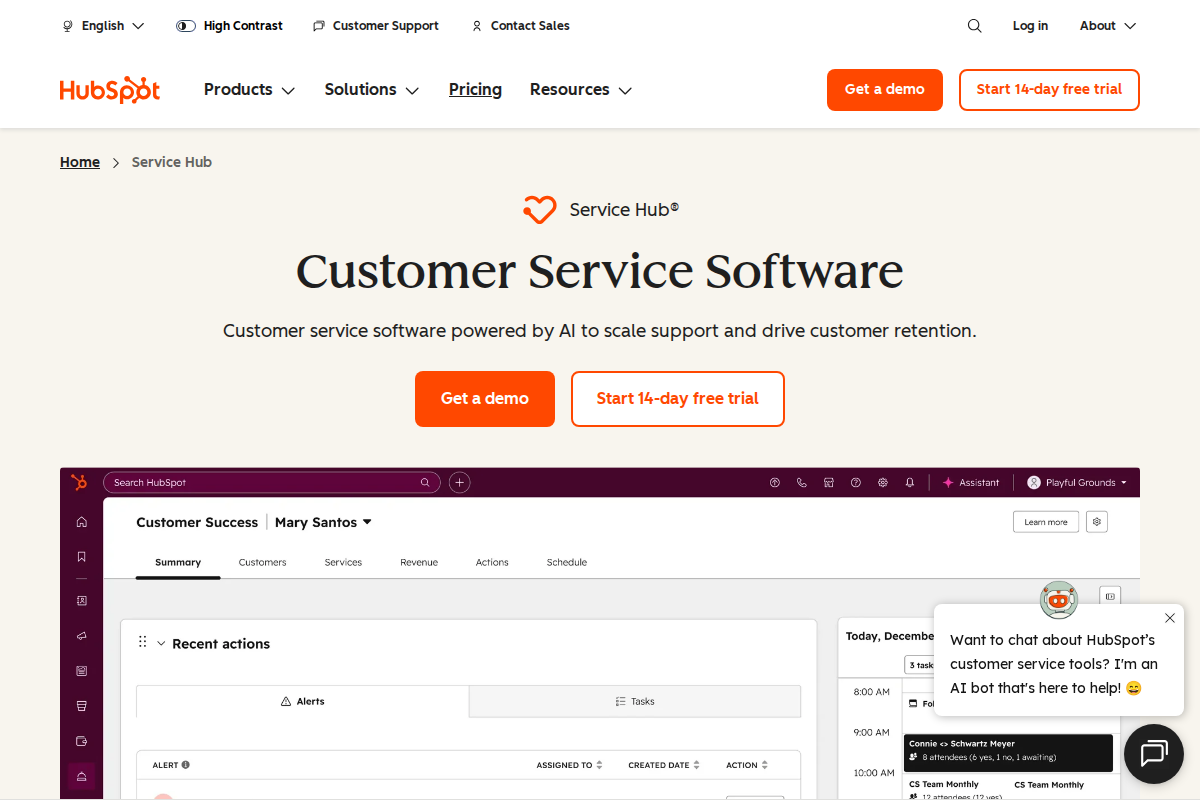
HubSpot and Zoho CRM both offer comprehensive customer relationship management, but at vastly different price points and value propositions. HubSpot charges premium prices for polished, integrated software with excellent user experience. Zoho delivers similar features at a fraction of the cost, making it highly attractive for budget-conscious teams.
The choice ultimately depends on whether you value polish and integration or maximum features per dollar spent.
Quick Verdict
| Use Case | Winner |
|---|---|
| User experience | HubSpot |
| Value for money | Zoho |
| All-in-one platform | HubSpot |
| Customization | Zoho |
| Free tier | Zoho |
| Ecosystem depth | Zoho |
| Ease of use | HubSpot |
| Enterprise scale | Zoho |
Bottom line: Pick Zoho if you want comprehensive CRM features at affordable prices with deep customization. Choose HubSpot if you value polished user experience and unified marketing/sales/service platform integration. Budget-conscious SMBs often start with Zoho, while growth-focused companies prefer HubSpot's integrated approach.
Pricing Compared
Zoho is 3-5x cheaper across all paid tiers, creating significant cost savings for larger teams and enterprises. The free tiers are comparable and generous compared to competitors.
User Experience
HubSpot wins. The interface is polished, intuitive, and enjoyable to use. Every interaction feels thoughtfully designed and user-friendly.
Zoho works well but feels more utilitarian and business-focused. Functional, not delightful. However, Zoho's extensive feature set compensates for the less polished interface with raw capability.
If your team will use CRM daily, HubSpot's experience reduces friction and increases adoption. Sales reps entering data consistently is worth the premium price for many organizations seeking productivity.
Feature Depth
Zoho wins. More features, more customization, more options:
- 500+ custom fields per module
- Custom modules beyond standard CRM
- Advanced workflow rules
- Built-in email marketing
- Inventory management
- Full accounting integration
HubSpot covers essentials well but Zoho goes deeper with advanced customization options and features that power users appreciate.
All-in-One Platform
HubSpot wins. Native integration of CRM, marketing, sales, and service:
- Email marketing
- Social media management
- Landing pages
- Helpdesk (Service Hub)
- Analytics across all
Zoho has Zoho One (40+ apps), but they're separate products, not truly unified.
Customization
Zoho wins. Almost everything is customizable:
- Custom modules
- Custom functions (code)
- Canvas builder for UI redesign
- Complex workflow automation
HubSpot offers customization within its framework. Zoho lets you reshape the platform to match your exact business requirements.
Free Tier
Tie. Both offer generous free CRM:
HubSpot free: Full contact/deal management, email tracking, meeting scheduling, and task management.
Zoho free: Full CRM for 3 users, including automation and extensive customization options.
Both are genuinely functional free tiers, not limited-time trials.
Ecosystem
Zoho wins. Zoho One includes 40+ apps: CRM, email marketing, accounting, HR, project management, and more.
HubSpot has integrations but builds fewer native products compared to Zoho's extensive suite. Zoho offers more within its ecosystem.
Ease of Use
HubSpot wins. Gentler learning curve, better onboarding, more intuitive design.
Zoho is more complex. More features mean more to learn. More powerful but steeper.
Mobile Experience
HubSpot wins. The mobile app is fast, intuitive, and feature-complete.
Zoho's mobile app is capable but busier. More features crammed in, less polished.
Real-World Scenarios
Scenario 1: Budget-Conscious SMB
Need CRM, tight budget, 5 users.
Winner: Zoho. $0-70/month vs HubSpot's $225+/month. Zoho saves $1,800+/year.
Scenario 2: Growth-Focused Startup
Need CRM + marketing automation, planning rapid scaling.
Winner: HubSpot. Unified platform scales better. Marketing/sales alignment matters.
Scenario 3: Solo Entrepreneur
Just starting, need basic CRM.
Winner: Tie. Both free tiers work well. Pick based on which interface you prefer.
Scenario 4: Complex Enterprise
Need heavy customization, unique workflows.
Winner: Zoho. The customization depth handles edge cases HubSpot can't.
Migration Between Them
Moving either direction is straightforward. Both offer good export/import tools.
Zoho to HubSpot is common when companies want polish over price. HubSpot to Zoho happens when budget tightens.
The Verdict
Pick Zoho if:
- Budget matters significantly
- You want features per dollar
- Customization is important
- You need deep functionality
- You're willing to trade polish for power
Pick HubSpot if:
- User experience matters
- You want unified marketing/sales/service
- Team adoption is critical
- You value polish over price
- You need integrated platform over best features
Don't pick either if:
- You need simple, cheap CRM (consider Pipedrive)
- You want sales-only focus (consider Freshsales)
- You need enterprise power (consider Salesforce)
- HubSpot vs Pipedrive — Comparing HubSpot with sales-focused CRM
- Pipedrive vs Zoho CRM — Value-focused CRM comparison
- HubSpot vs Salesforce — Enterprise CRM alternatives
Related Articles
- How to Choose Helpdesk Software — Selection framework
- Best Helpdesk for Small Business — Top picks
What Real Users Say About HubSpot Service Hub
Overall sentiment: HubSpot Service Hub holds a 4.3/5 rating on G2 with 313 mentions praising ease of use, but faces criticism for pricing starting at $90/agent/month and slow customer support response times.
What users consistently praise:
G2 reviews emphasize the platform's user-friendly interface with "exceptional" ease of use streamlining customer support workflows. The all-in-one CRM integration — connecting marketing, sales, and service data — receives consistent praise from teams wanting unified customer views. Lagrowthmachine notes the free CRM tier includes unlimited users, providing genuine value for startups testing the platform. Automation capabilities and comprehensive reporting tools satisfy teams needing sophisticated workflow management without technical complexity.
Recurring complaints:
Trustpilot reviews (January 2026) document significant customer service issues, with one user describing "unprofessional, disrespectful" support interactions when trying to resolve plan issues. Pricing escalates quickly — Tldv.io and Featurebase note the steep costs when scaling, with Marketing + Service Hub Professional reaching $3,500-$4,500/month compared to best-of-breed alternatives at $900-$1,400. The learning curve for beginners remains substantial despite the intuitive interface. Integration troubleshooting with third-party tools creates frustration according to SmartBugMedia reviews.
The non-obvious takeaway:
Reddit r/hubspot discussions reveal a common pattern where companies adopt Service Hub for its CRM integration but later face "suite lock-in" — the convenience of unified data makes migrating individual components (service, marketing, sales) prohibitively expensive and complex, effectively trapping growing companies in pricing tiers that outpace their budget.
Sources: G2, Lagrowthmachine, Trustpilot, Tldv.io, Featurebase, Reddit. Data aggregated February 2026.
What Real Users Say About Zoho Desk
Overall sentiment: Zoho Desk maintains positive reviews for its affordable pricing starting at $14/agent/month and Zoho ecosystem integration, though users criticize complex authentication and limited mobile app functionality.
What users consistently praise:
Gartner Peer Insights and SoftwareSuggest reviews emphasize seamless integration between Help Center, ticket management, and automation features that "brings everything we need for customer support into a single, unified platform." The clean, intuitive interface allows new agents to start quickly without extensive training. Eesel AI notes the Standard plan at $14/agent/month offers "best value" with public knowledge base, community forums, and SLA management. Scaling capabilities satisfy growing businesses without forcing premature upgrades.
Recurring complaints:
Trustpilot reviews document frustration with "over complicated sign in procedure" involving circular codes and poor app communication between logins. SoftwareSuggest notes advanced features remain limited to higher-tier plans, gating functionality for budget-conscious teams. The mobile app lacks desktop version capabilities, creating workflow gaps for remote agents. Reddit and community forums mention a cluttered user interface that creates steep learning curves despite intuitive core features. Third-party integrations beyond the Zoho ecosystem receive criticism for limited depth.
The non-obvious takeaway:
Trustpilot and Reddit discussions reveal a pattern where Zoho Desk works best for businesses already committed to the Zoho ecosystem — standalone users report frustration with authentication complexity and integration limitations, while Zoho CRM/Finance users describe seamless workflows, suggesting the platform's value proposition depends heavily on existing Zoho adoption rather than serving as a best-of-breed standalone solution.
Sources: Gartner, SoftwareSuggest, Eesel AI, Trustpilot, Reddit. Data aggregated February 2026.
Frequently Asked Questions
Is HubSpot worth 3-5x Zoho's price?
For user experience and unified platform, yes. For features per dollar, no.
Can Zoho do everything HubSpot does?
Feature-wise, mostly yes. But the experience isn't as polished. Trade-offs exist.
Which is better for small businesses?
Zoho for budget, HubSpot for experience. Both free tiers work for tiny businesses.
Should I start with Zoho and upgrade to HubSpot?
Common path. Start with Zoho's value, move to HubSpot when you need polish and platform.
Which has better customer support?
HubSpot. More responsive, more resources. Zoho's support is adequate but inconsistent.

Erika A.
Pricing & Comparison SpecialistErika breaks down SaaS pricing tiers, hidden fees, and value-for-money across helpdesk and customer support tools at AgentWhispers. Her comparison frameworks help teams make informed purchasing decisions.